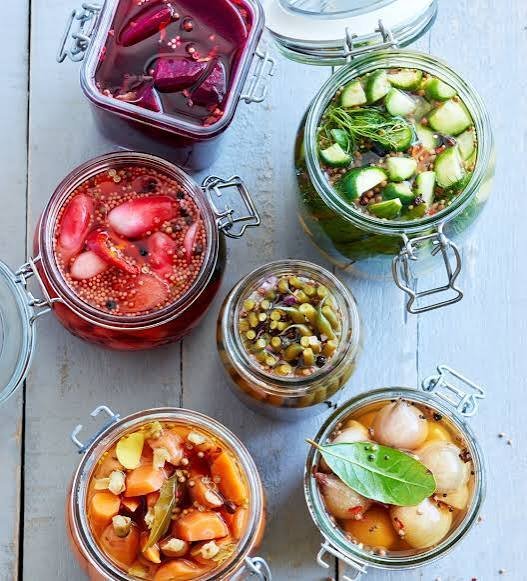
Once you understand the basic formula for a pickle brine, you can pickle almost anything — cucumbers, onions, jalapeños, carrots, green beans, and more. In this post, we’re sharing a simple, versatile quick-pickle brine recipe that works as a base for endless variations, along with a roundup of specific pickle recipes worth trying.
The Basic Formula for Any Quick Pickle
Quick pickles (also called refrigerator pickles) rely on a simple ratio of vinegar, water, salt, and sugar. Once you’ve got that ratio down, you can pickle nearly any vegetable by simply swapping what goes into the jar, along with whatever herbs and spices you like.
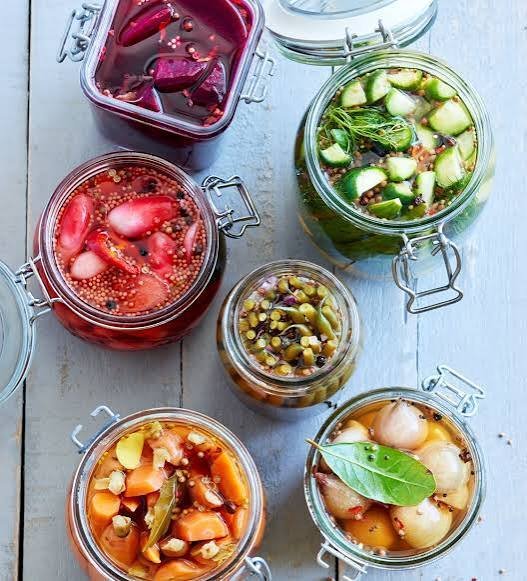
Ingredients
Basic brine (makes about 2 cups, enough for 1 quart jar)
- 1 cup white vinegar or apple cider vinegar
- 1 cup water
- 1 ½ tablespoons kosher salt
- 1-2 tablespoons granulated sugar (adjust to taste)
Vegetables (choose one or mix and match)
- 1 lb cucumbers, sliced into spears or rounds
- Or 2 cups thinly sliced red onion
- Or 2-3 sliced jalapeños
- Or 2 cups sliced carrots
- Or 1 lb trimmed green beans
Optional flavorings
- 2-3 cloves garlic, smashed
- 1 teaspoon whole black peppercorns
- 1 teaspoon mustard seeds
- A few sprigs of fresh dill
- 1 bay leaf
- ½ teaspoon red pepper flakes
Equipment
- A small saucepan
- Clean jars with lids
- A sharp knife
- A funnel (optional)
Instructions
Step 1: Prep your vegetable
Wash and slice your chosen vegetable into your preferred shape — spears, rounds, or left whole, depending on what you’re pickling and your jar size.
Step 2: Pack the jar
Add any garlic, spices, and herbs to the bottom of a clean jar. Pack the sliced vegetables in tightly, leaving about ½ inch of headspace at the top.
Step 3: Make the brine
In a small saucepan, combine the vinegar, water, salt, and sugar. Bring to a boil over medium-high heat, stirring until the salt and sugar fully dissolve. Remove from heat.
Step 4: Fill the jar
Pour the hot brine over the vegetables, using a funnel if needed, making sure everything is fully submerged. Gently tap the jar on the counter to release trapped air bubbles.
Step 5: Cool and refrigerate
Let the jar cool to room temperature on the counter, uncovered, then seal with a lid and refrigerate.
Step 6: Wait for the flavor to develop
Let the pickles sit for at least a few hours for a light pickle flavor, or 24-48 hours for a more deeply pickled result. Thinner vegetables like onions pickle faster than thicker ones like whole green beans.
Tips for the Best Quick Pickles
- Adjust the sugar to taste — less for a tangier pickle, more for a sweeter one, similar to bread and butter style.
- Use kosher or pickling salt, not iodized table salt, which can cloud the brine.
- Slice thinner for faster pickling if you’re short on time.
- Reuse leftover brine once for a second batch of vegetables, though flavor will be slightly milder the second time.
- Label your jars with the date and contents, especially if you’re pickling a few different vegetables at once.
Storage
Quick pickles will keep well in the refrigerator for up to 1-2 months, depending on the vegetable. Always use a clean utensil when removing pickles from the jar.
More Pickle Recipes to Try
Once you’ve got the base method down, here are a few specific pickle recipes worth exploring:
- Bread and butter pickles — a sweeter, mustard-seed and turmeric spiced version made with cucumbers and onions.
- Garlic dill pickles — the classic tangy, garlicky cucumber pickle flavored with fresh dill and peppercorns.
- Pickled red onions — thinly sliced red onions pickled in a simple vinegar brine, perfect on tacos, salads, and sandwiches.
- Pickled jalapeños — sliced jalapeños in a vinegar brine, great for topping nachos, burgers, or pizza.
- Pickled green beans (dilly beans) — whole green beans pickled with garlic and dill, a crunchy, tangy snack or Bloody Mary garnish.
Final Thoughts
Once you understand the basic vinegar-salt-sugar ratio, pickling becomes one of the easiest and most flexible kitchen skills to have. Whether it’s cucumbers, onions, or green beans, this quick-pickle method turns almost any vegetable into a tangy, crunchy addition to sandwiches, salads, and snack boards.