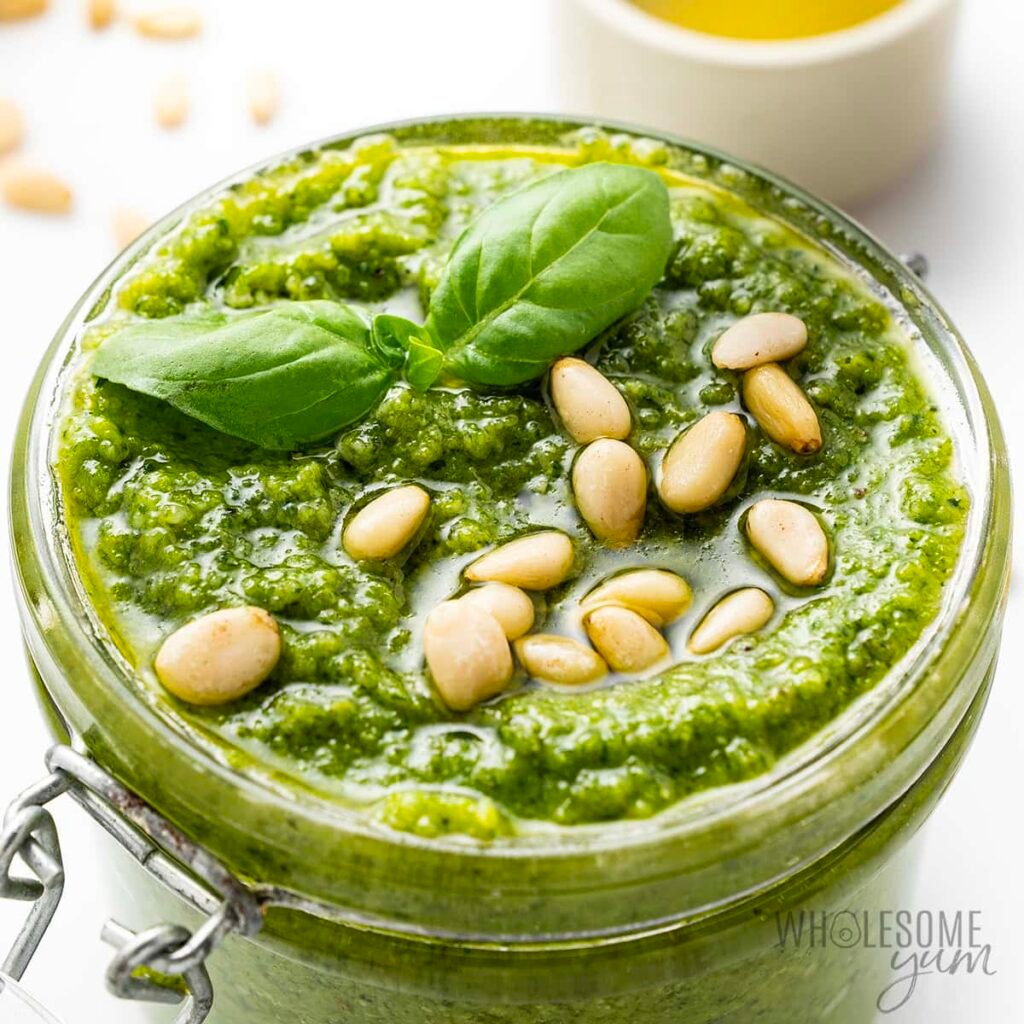
Homemade pesto is one of those recipes that feels fancy but is genuinely simple to make — just a handful of ingredients blended together in about 10 minutes. This classic Genovese-style pesto is bright, garlicky, and full of fresh basil flavor, perfect for tossing with pasta, spreading on sandwiches, or spooning over roasted vegetables.
Why Homemade Pesto Beats Store-Bought
Jarred pesto often tastes dull and overly oily compared to a fresh batch made at home. Making it yourself only takes a few minutes with a food processor, and the vibrant green color and fragrant, garlicky aroma are a completely different experience from anything shelf-stable.
Ingredients
- 2 cups fresh basil leaves, packed (stems removed)
- ½ cup grated parmesan cheese
- ½ cup extra virgin olive oil
- ⅓ cup pine nuts (walnuts or almonds work as substitutes)
- 2-3 cloves garlic, peeled
- ½ teaspoon salt, or to taste
- Freshly ground black pepper, to taste
- 1 tablespoon fresh lemon juice (optional, helps keep the color bright)
Equipment
- A food processor or high-powered blender
- A rubber spatula
- An airtight container or jar for storage
Instructions
Step 1: Toast the nuts
In a dry skillet over medium-low heat, toast the pine nuts for 2-3 minutes, stirring frequently, until lightly golden and fragrant. Watch closely, since nuts can burn quickly. Let them cool for a few minutes before using.
Step 2: Wash and dry the basil
Rinse the basil leaves and pat them completely dry with a clean towel or paper towels. Excess water can dilute the pesto and shorten its shelf life, so make sure the leaves are as dry as possible.
Step 3: Combine the base ingredients
In a food processor, combine the basil leaves, toasted pine nuts, garlic, and salt. Pulse several times until everything is finely chopped and starting to combine.
Step 4: Stream in the olive oil
With the food processor running, slowly stream in the olive oil until the mixture becomes a smooth, slightly thick paste, scraping down the sides as needed.
Step 5: Add the cheese
Add the grated parmesan and pulse a few more times until just combined — over-processing at this stage can make the pesto slightly bitter. Stir in the lemon juice, if using, and adjust the salt and pepper to taste.
Step 6: Store or use immediately
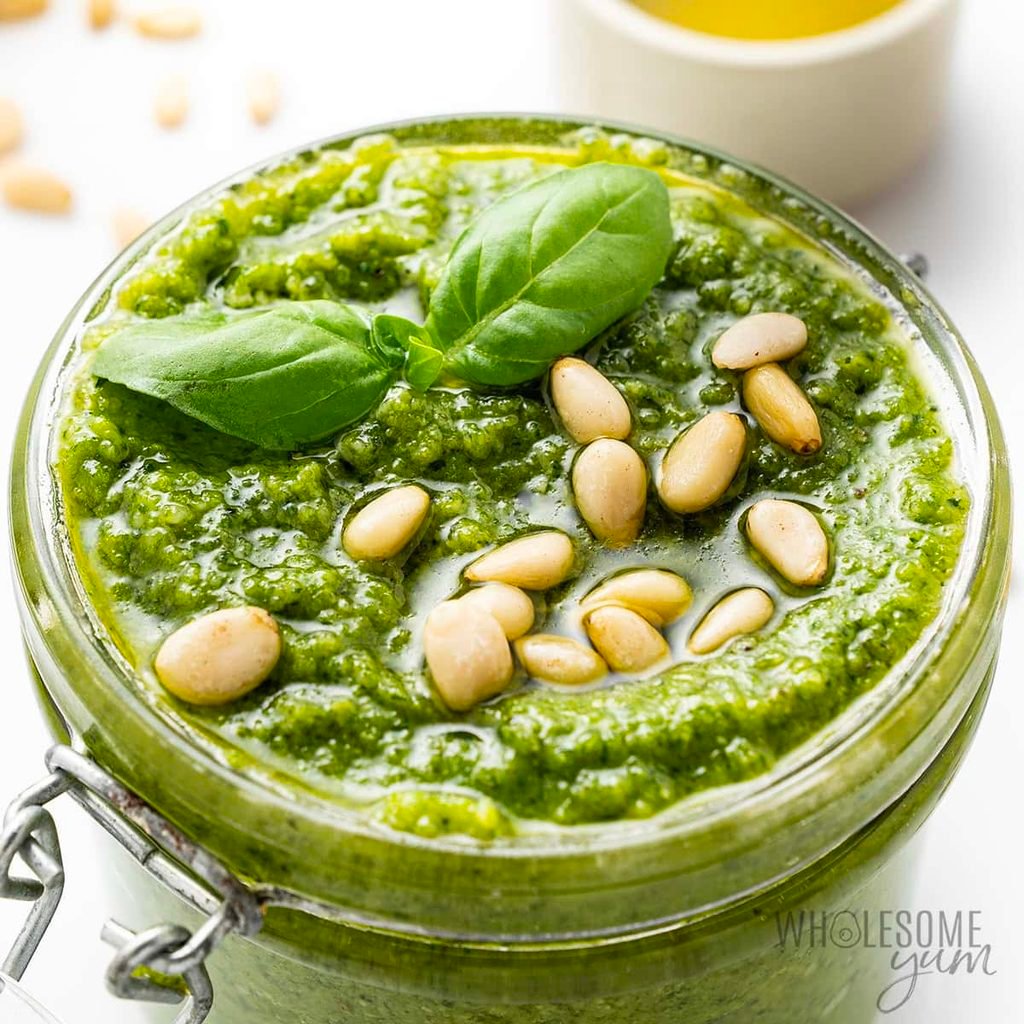
Transfer the pesto to an airtight container. If not using right away, press a thin layer of olive oil over the top before sealing — this helps preserve the bright green color by limiting air exposure.
Tips for the Best Pesto
- Don’t skip drying the basil — wet leaves can make the pesto watery and reduce its shelf life.
- Toast the nuts for deeper flavor; skipping this step will give you a flatter-tasting pesto.
- Adjust the consistency with a little extra olive oil if you want a thinner pesto for tossing with pasta, or keep it thicker for spreading on sandwiches.
- Freeze it in portions. Pesto freezes beautifully in ice cube trays — once frozen, transfer the cubes to a freezer bag for easy, single-serving portions later.
- Taste as you go, since the saltiness of parmesan can vary between brands.
Ways to Use Pesto
- Toss with hot pasta for a quick weeknight dinner.
- Spread on sandwiches or wraps in place of mayo.
- Swirl into soups, like minestrone or tomato soup, for extra flavor.
- Use as a pizza base instead of tomato sauce.
- Spoon over roasted or grilled vegetables, chicken, or fish.
Storage
Store fresh pesto in an airtight container in the refrigerator for up to 5-7 days, with a thin layer of olive oil on top to help preserve the color. For longer storage, freeze for up to 3 months.
Final Thoughts
This classic pesto recipe is a simple staple worth having on hand — it comes together quickly, tastes far better than anything store-bought, and works in so many dishes beyond just pasta. Once you’ve made a batch, you’ll likely find yourself reaching for it all season long.