
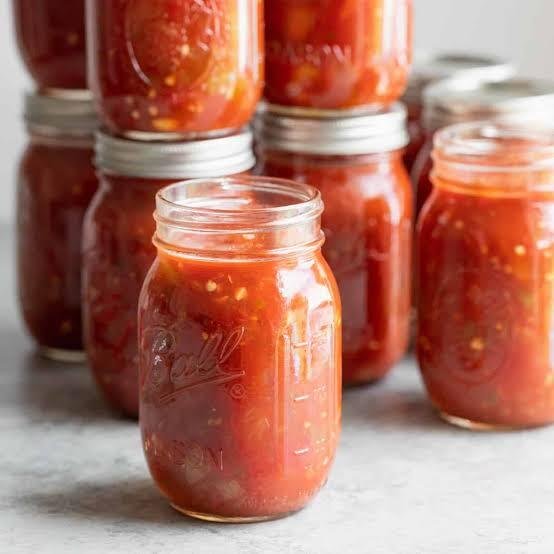
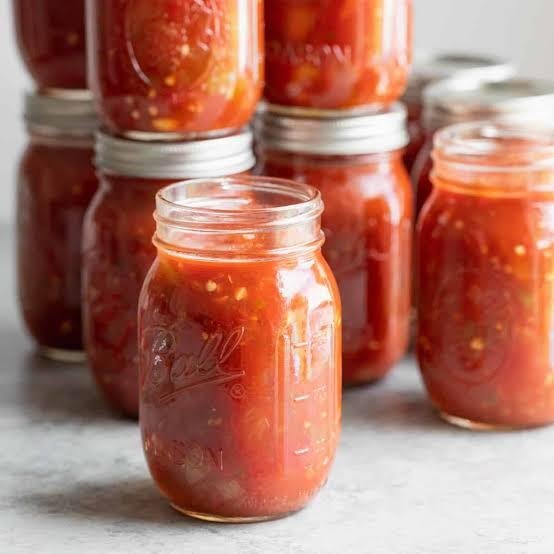
Canning your own salsa is a great way to preserve a big tomato harvest and enjoy that fresh, homemade flavor all year long. This recipe uses a tested ratio of tomatoes, peppers, onions, and vinegar that’s safe for water bath canning, giving you shelf-stable jars of salsa ready to open anytime you need a quick appetizer or topping.
A Note on Canning Salsa Safely
Salsa is a mix of low-acid vegetables (tomatoes, onions, peppers), which means it needs enough added acid to be safely processed in a water bath canner. This recipe uses a specific, tested ratio of vinegar to vegetables to ensure safe acidity levels. Don’t adjust the amount of vinegar, tomatoes, onions, or peppers without following a tested recipe, since changing those proportions can affect the salsa’s safety for canning. If you want to change the flavor, adjust spices and seasonings like cumin, cilantro, or salt instead, which don’t affect acidity.
Ingredients
Makes about 6-7 pint jars
- 7 cups peeled, cored, and chopped tomatoes (about 5-6 lbs fresh tomatoes)
- 3 cups chopped onion
- 2 cups chopped bell peppers (any color)
- 1-2 cups chopped jalapeños or other hot peppers (adjust to taste)
- 6 cloves garlic, minced
- 1 cup bottled lemon juice or vinegar (5% acidity) — use bottled, not fresh, for consistent acidity
- 2 tablespoons canning or pickling salt
- 2 tablespoons ground cumin (optional)
- 1 cup fresh cilantro, chopped (optional, added after cooking for the best color and flavor)
Equipment
- A large pot for blanching tomatoes
- A bowl of ice water
- A large, heavy-bottomed pot for cooking the salsa
- A water bath canner
- 6-7 pint-sized canning jars with new lids and bands
- A jar lifter and canning funnel
- A ladle
Instructions
Step 1: Peel the tomatoes
Bring a large pot of water to a boil and prepare a bowl of ice water. Score a small X into the bottom of each tomato, blanch for 30-45 seconds, then transfer to the ice water. The skins should slip off easily. Core and chop the peeled tomatoes.
Step 2: Prep the remaining vegetables
Chop the onion, bell peppers, and jalapeños into small, even pieces. Mince the garlic.
Step 3: Combine and cook
In a large, heavy-bottomed pot, combine the chopped tomatoes, onion, bell peppers, jalapeños, garlic, bottled lemon juice or vinegar, salt, and cumin (if using). Bring to a boil over medium-high heat, then reduce the heat and simmer, stirring occasionally, for 10-20 minutes, until the salsa has thickened slightly and the vegetables have softened.
Step 4: Prep your jars and canner
While the salsa simmers, wash your jars, lids, and bands in hot, soapy water. Keep the jars warm until ready to fill. Fill your water bath canner about halfway with water and begin heating it.
Step 5: Fill the jars
Ladle the hot salsa into the warm jars, leaving ½-inch headspace. Run a bubble remover or thin utensil around the inside of each jar to release trapped air, then top off with more salsa if needed to maintain the correct headspace.
Step 6: Wipe, seal, and process
Wipe the rims of the jars with a clean, damp cloth. Place the lids on top and screw the bands on until fingertip-tight. Using a jar lifter, lower the jars into the boiling water bath canner, making sure they’re covered by at least 1-2 inches of water.
Process the jars in the boiling water bath for:
- 15 minutes for pint jars
- 20 minutes for quart jars
(Adjust processing time for your altitude — add 5 minutes for elevations of 1,001-6,000 feet, and 10 minutes above 6,000 feet.)
Step 7: Cool and check the seals
Carefully remove the jars with a jar lifter and place them on a towel on the counter, leaving space between jars. Let them cool undisturbed for 12-24 hours. Check the seal on each lid by pressing the center — it should not flex or pop. Refrigerate any unsealed jars and use within a few weeks.
Step 8: Add fresh cilantro (optional)
If using fresh cilantro, stir it into each jar right before serving rather than canning it — cilantro can turn dark and lose flavor during the canning process, so it’s best added fresh at the time of eating.
Tips for the Best Canned Salsa
- Use bottled lemon juice or vinegar, not fresh-squeezed, since bottled acidity is standardized and necessary for safe canning.
- Don’t alter the ratio of tomatoes, peppers, onions, and acid from a tested recipe, since this affects the safety of the final product.
- Drain very juicy tomatoes slightly if the salsa seems too watery after cooking, or simmer a bit longer to thicken.
- Wear gloves when handling jalapeños, especially if leaving the seeds in.
- Label your jars with the canning date to track freshness.
Storage
Properly sealed jars can be stored in a cool, dark pantry for up to a year. Once opened, refrigerate and use within about a week.
Final Thoughts
Canning your own salsa is a rewarding way to make the most of a big tomato harvest, giving you a pantry full of ready-to-eat salsa whenever the craving hits. Sticking to a tested ratio keeps the process safe, while still leaving plenty of room to adjust spice and seasoning to your taste.