
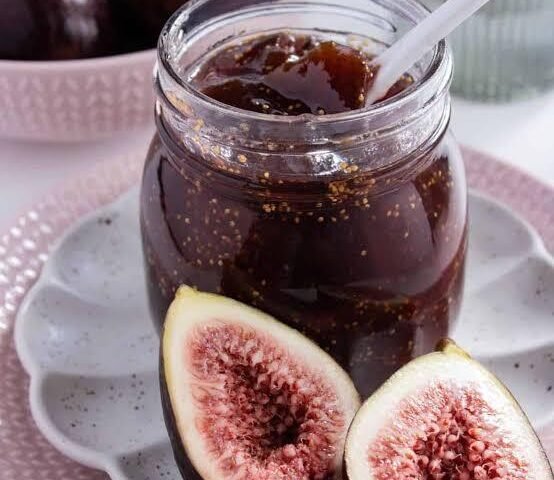
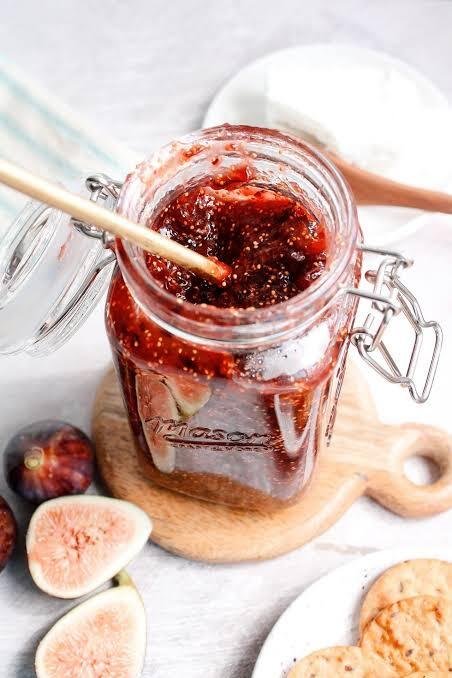
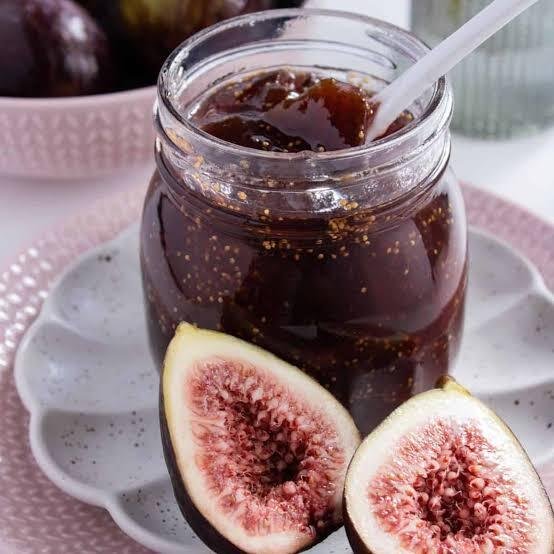
Fig jam is a rich, deeply flavored preserve that captures the honeyed sweetness of fresh figs. Unlike some fruit jams, figs are naturally high in pectin, so this recipe doesn’t require any added pectin — just figs, sugar, and a splash of lemon juice, simmered down into a thick, spreadable jam. It’s fantastic on toast, paired with cheese, or spooned over roasted meats.
Why Fig Jam Doesn’t Need Added Pectin
Figs contain natural pectin, especially in their skins, which means this jam thickens up nicely on its own with just a bit of stovetop simmering. This makes the process simpler than jams that rely on store-bought pectin, though it does take a bit of patience while the mixture reduces.
Ingredients
- 2 lbs fresh figs, stemmed and quartered
- 1 cup granulated sugar
- 3 tablespoons fresh lemon juice
- 1 cinnamon stick (optional)
- ¼ teaspoon salt
Equipment
- A large, heavy-bottomed pot or Dutch oven
- A potato masher
- A water bath canner (if canning for shelf storage)
- 3-4 half-pint canning jars with new lids and bands
- A jar lifter and canning funnel
- A ladle
Instructions
Step 1: Prep the figs
Wash the figs and trim off the stems. Quarter them, leaving the skins on, since they contain much of the natural pectin that helps the jam set.
Step 2: Macerate the figs
In a large bowl, combine the quartered figs with the sugar and lemon juice. Toss to coat and let sit at room temperature for about 30 minutes to an hour, allowing the sugar to draw out some of the fig’s natural juices.
Step 3: Cook the jam
Transfer the macerated figs and any accumulated juices to a large, heavy-bottomed pot. Add the cinnamon stick, if using, and the salt. Bring to a boil over medium-high heat, then reduce to a simmer.
Step 4: Simmer and mash
Let the mixture simmer for 30-40 minutes, stirring occasionally and mashing the figs with a potato masher as they soften, until the jam has thickened and reduced significantly. It should coat the back of a spoon and mound slightly when a bit is placed on a cold plate.
Step 5: Test the set
Remove the pot from heat. To check the consistency, place a small spoonful on a chilled plate (kept in the freezer beforehand) and let it sit for a minute — if it wrinkles slightly when pushed with your finger, it’s ready. If it’s still too thin, simmer for another 5-10 minutes and test again.
Step 6: Remove the cinnamon stick and jar
Remove the cinnamon stick, if used. Ladle the hot jam into clean, warm half-pint jars, leaving ¼-inch headspace. Wipe the rims clean, apply the lids, and screw the bands on until fingertip-tight.
Step 7: Process (for shelf-stable storage)
Process the filled jars in a boiling water bath for 10 minutes (adjusting for altitude as needed). Remove with a jar lifter and let cool undisturbed on a towel for 12-24 hours, checking that the lids have sealed properly.
Tips for the Best Fig Jam
- Use ripe, fragrant figs for the best natural sweetness and flavor.
- Leave the skins on — they contribute both flavor and natural pectin that helps the jam set.
- Stir frequently as the jam thickens, since it can scorch on the bottom of the pot if left unattended.
- Add warm spices like a cinnamon stick or a few cloves for extra depth, removing them before jarring.
- Skip canning if you prefer — simply cool the jam and store it directly in the refrigerator as a “refrigerator jam.”
Storage
Properly sealed, canned jars can be stored in a cool, dark pantry for up to a year. Once opened, refrigerate and use within about 3 weeks. Unsealed or refrigerator-only jam should be kept in the fridge and used within 3-4 weeks.
Final Thoughts
Fig jam is a rich, naturally sweet preserve that’s simpler to make than many other jams thanks to the fig’s natural pectin. Once you’ve made a batch, it’s a wonderful addition to a cheese board, a slice of toast, or glazed over roasted chicken or pork.