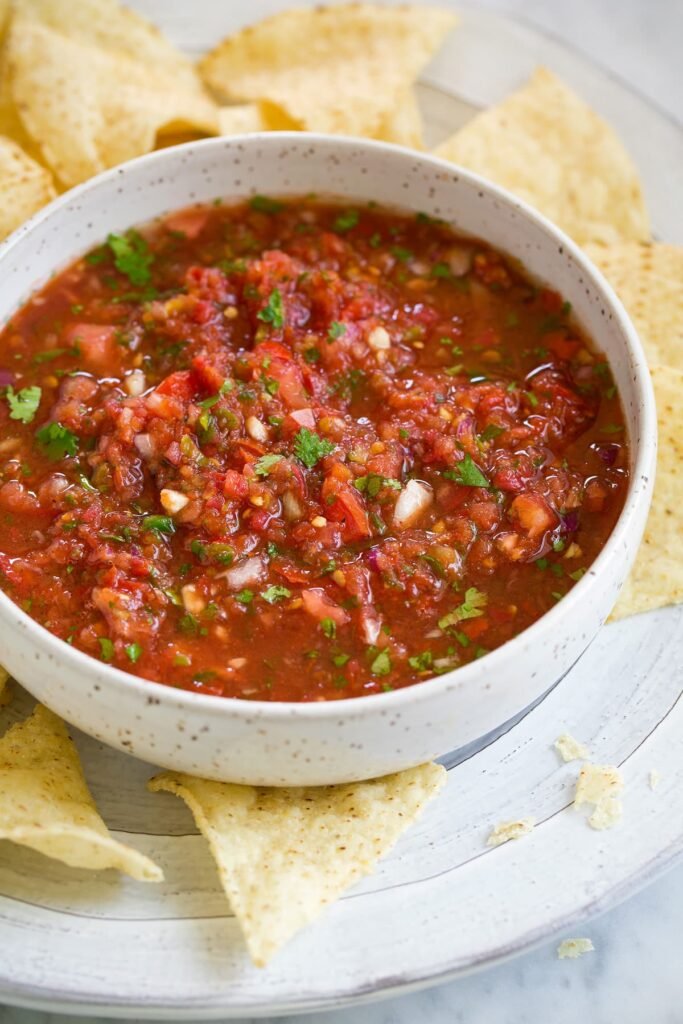
Homemade salsa is one of the best ways to preserve the fresh flavor of ripe tomatoes, peppers, onions, and herbs for later. This salsa has a delicious balance of tangy tomatoes, mild heat, garlic, and fresh lime flavor. Once prepared, it can be processed in jars so you can enjoy homemade salsa long after tomato season is over.
When canning salsa, it is important to use a tested recipe and follow proper water-bath canning procedures. The acidity of the ingredients is essential for safe preservation, so avoid changing the proportions of tomatoes, peppers, onions, or acid in a canning recipe.
Why Make Homemade Salsa?
Making your own salsa allows you to control the ingredients, texture, and level of heat. You can make it mild for everyday snacking or add extra jalapeños for a spicier version.
Canning also makes it possible to preserve a large batch of garden tomatoes at their peak. Properly processed jars can be stored in your pantry and opened whenever you want a quick appetizer, topping, or snack.
Ingredients
- 8 cups peeled, seeded, and chopped tomatoes
- 2 cups chopped onions
- 1 ½ cups chopped bell peppers
- 1 cup chopped jalapeño peppers
- 6 cloves garlic, finely minced
- 1 ½ cups bottled lemon juice
- 2 tablespoons granulated sugar
- 2 teaspoons salt
- 1 teaspoon ground cumin
- ½ teaspoon black pepper
- ½ cup chopped fresh cilantro
Important: For canning, use bottled lemon juice and follow the ingredient quantities in a tested canning recipe. Do not reduce the amount of acid or significantly alter the proportions of low-acid ingredients.
Equipment
- Large stockpot
- Large saucepan or canning pot
- Pint canning jars
- New canning lids
- Screw bands
- Jar lifter
- Canning funnel
- Ladle
- Bubble remover or plastic utensil
- Clean kitchen towels
Instructions
Step 1: Prepare the Tomatoes
Wash the tomatoes thoroughly. Remove the cores and make a small X on the bottom of each tomato.
Bring a large pot of water to a boil. Carefully place the tomatoes into the boiling water for about 30 to 60 seconds, or until the skins begin to loosen.
Transfer them immediately to a bowl of ice water. Once cool enough to handle, peel away the skins. Remove the seeds and excess liquid, then chop the tomatoes.
Step 2: Prepare the Vegetables
Chop the onions and bell peppers into small, even pieces. Remove the stems and seeds from the jalapeños if you prefer a milder salsa. For more heat, some of the seeds and membranes can be left in.
Finely mince the garlic and chop the cilantro.
Step 3: Cook the Salsa
Add the tomatoes, onions, bell peppers, jalapeños, garlic, bottled lemon juice, sugar, salt, cumin, and black pepper to a large pot.
Bring the mixture to a boil over medium-high heat, stirring frequently. Reduce the heat and simmer until the salsa reaches your preferred consistency.
Stir in the cilantro near the end of cooking.
Step 4: Prepare the Jars
While the salsa cooks, wash the jars, lids, and screw bands thoroughly.
Keep the jars hot until they are ready to be filled. This helps prevent thermal shock when hot salsa is added.
Step 5: Fill the Jars
Place a canning funnel over a hot jar and carefully ladle the hot salsa into it.
Leave the headspace specified by your tested canning recipe. Wipe the rim of the jar with a clean, damp towel to remove any salsa or liquid.
Place a new lid on the jar and screw on the band until it is fingertip-tight. Do not overtighten.
Repeat with the remaining jars.
Step 6: Process the Jars
Place the filled jars upright in a boiling-water canner, making sure they are covered with the required amount of water.
Process the jars according to the tested recipe and your altitude. Processing times can vary depending on jar size, recipe, and elevation, so use the specific time provided by your tested canning recipe rather than guessing.
Step 7: Cool the Jars
When processing is complete, carefully remove the jars using a jar lifter. Place them upright on a towel, leaving space between the jars.
Allow them to cool undisturbed for 12 to 24 hours.
Step 8: Check the Seals
After the jars have cooled, check each lid. A properly sealed lid should be firmly attached and should not flex up and down when pressed.
Any jar that has not sealed should be refrigerated and used promptly rather than stored at room temperature.
Step 9: Label and Store
Remove the screw bands if desired, wipe the jars clean, and label them with the date.
Store properly sealed jars in a cool, dark, dry pantry. For best quality, use canned salsa within the recommended storage period from your tested canning recipe.
Tips for Making the Best Homemade Salsa
- Use ripe tomatoes for the freshest flavor and best texture.
- Chop the vegetables evenly so the salsa cooks consistently.
- Adjust the peppers for fresh salsa, but don’t alter proportions in a canning recipe unless the recipe specifically allows substitutions.
- Use bottled lemon juice when specified because its acidity is standardized.
- Don’t skip the processing step when preserving salsa for shelf storage.
- Check every jar for a proper seal before placing it in the pantry.
- Use tested canning recipes when preserving low-acid ingredients such as peppers and onions.
How to Make the Salsa Less Spicy
For a milder salsa, use mild peppers and remove the seeds and membranes from the jalapeños. If you are making salsa specifically for canning, however, make only substitutions that are permitted by the tested recipe you are following. Changing the quantities of peppers or other ingredients can affect the safety of the finished product.
How to Use Homemade Salsa
Once opened, homemade salsa is delicious with tortilla chips, tacos, burritos, nachos, grilled chicken, eggs, quesadillas, and rice bowls. You can also spoon it over baked potatoes or use it as a flavorful topping for grilled meats.
Storage
Unopened, properly processed jars should be stored in a cool, dark, dry location according to current home-canning storage guidance. Once a jar is opened, refrigerate it and use it within the recommended period.
If a jar shows signs of spoilage, including an unusual odor, mold, leaking, bulging, or a broken seal, do not taste it. Discard it safely.
Final Thoughts
Learning how to make and can homemade salsa is a great way to preserve fresh tomatoes and enjoy their flavor throughout the year. The key is preparing the salsa carefully, using the correct amount of acid, and following a tested canning method for safe processing. With a little preparation, you can fill your pantry with flavorful homemade salsa ready for tacos, chips, and countless easy meals.