
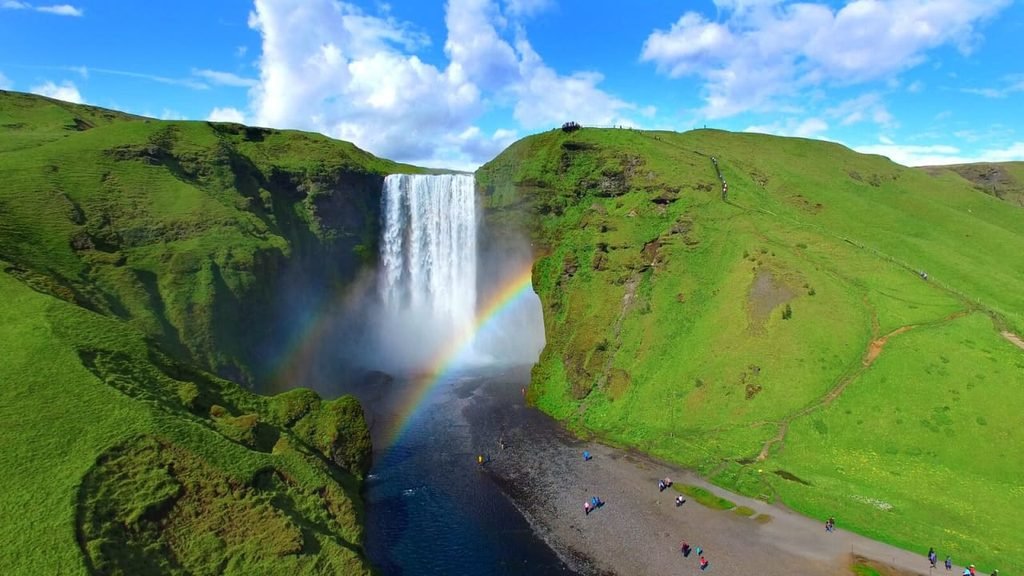
Most people arrive at Seljalandsfoss, take a few photos, walk behind the waterfall, and head back to their car without realizing another waterfall is waiting just a few minutes away.
Gljúfrabúi doesn’t announce itself from the parking lot. It’s tucked behind a narrow rock canyon, almost completely hidden until you’re standing at its entrance. That sense of discovery is part of what makes it special. Instead of seeing the waterfall from a distance, you have to step into the canyon, cross a shallow stream, and squeeze between moss-covered cliffs before the full waterfall suddenly comes into view.
It isn’t Iceland’s tallest waterfall or its most famous, but for many visitors, it’s the one they remember most.
What Is Gljúfrabúi?
Gljúfrabúi is a 40-meter (131-foot) waterfall hidden inside a narrow canyon on Iceland’s South Coast, just a short walk from Seljalandsfoss. Its name translates roughly to “Canyon Dweller” or “The One Who Lives in the Gorge,” a fitting description considering most of the waterfall is concealed behind towering rock walls.
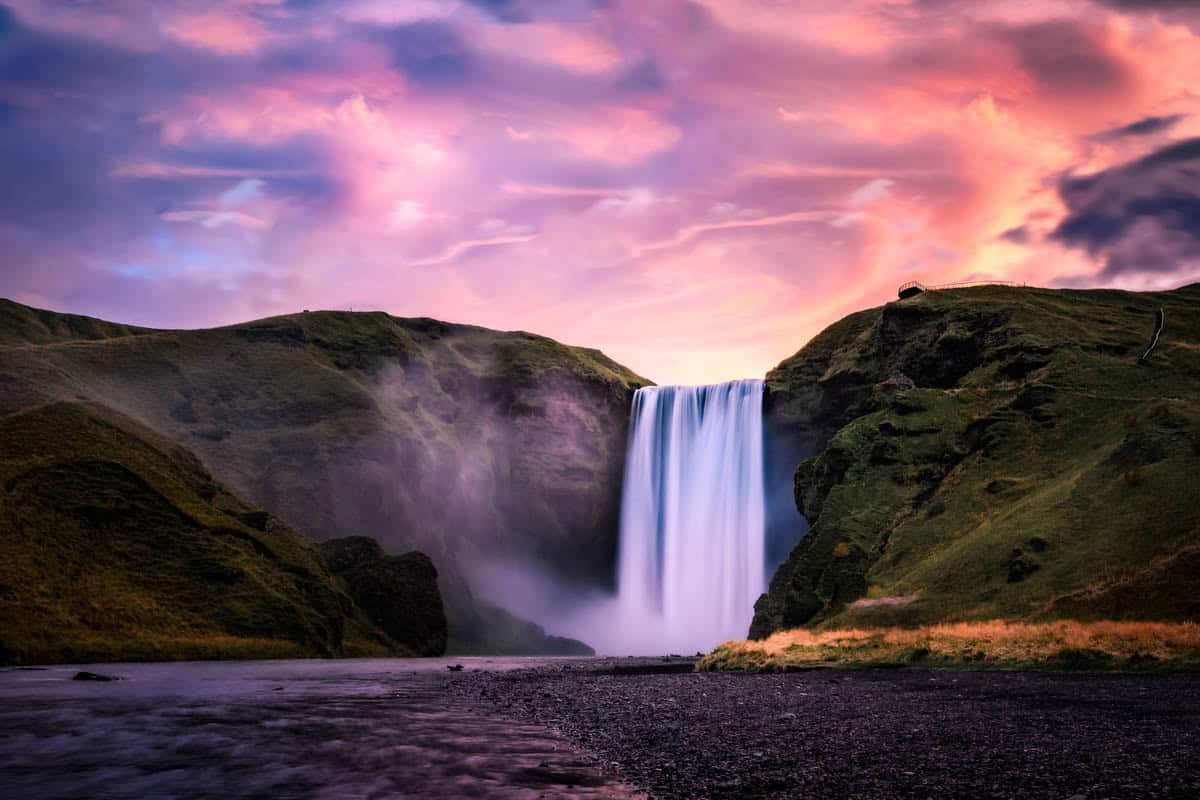
Unlike many of Iceland’s waterfalls, Gljúfrabúi remains invisible until you’re almost inside the canyon. The cliffs frame the falling water so tightly that the experience feels more like entering a natural chamber than visiting an open viewpoint.
That hidden setting is its defining feature and the reason it has become one of the South Coast’s favorite lesser-known stops.
Where Is Gljúfrabúi?
Gljúfrabúi sits immediately north of Seljalandsfoss along Iceland’s Ring Road.
The waterfall is only about a five-minute walk from the main Seljalandsfoss parking area, following a clearly marked footpath along the cliff line. Because both waterfalls share the same parking facilities, visiting them together is easy and requires very little additional time.
Many guided South Coast tours stop only at Seljalandsfoss, which means independent travelers often have a quieter experience at Gljúfrabúi.
Why Is Gljúfrabúi Famous?
Gljúfrabúi offers something increasingly rare at Iceland’s most popular attractions: surprise.
You don’t see the waterfall immediately. Instead, you hear it first. The sound echoes through the canyon before the waterfall reveals itself between the cliffs.

Walking through the narrow opening changes the entire perspective. Water pours into a small enclosed chamber, mist fills the air, and the steep rock walls make the space feel surprisingly intimate despite the waterfall’s height.
It’s less about scale and more about atmosphere.
How Do You Reach Gljúfrabúi?
Getting to the waterfall is straightforward, but reaching the best viewpoint requires a little more effort.
From the Seljalandsfoss parking area, follow the walking path north along the base of the cliffs. Within a few minutes, you’ll arrive at a narrow opening in the rock where a shallow stream flows out from the canyon.
To enter, visitors usually step across several stones placed in the water before continuing inside.
Those stepping stones are rarely dry.
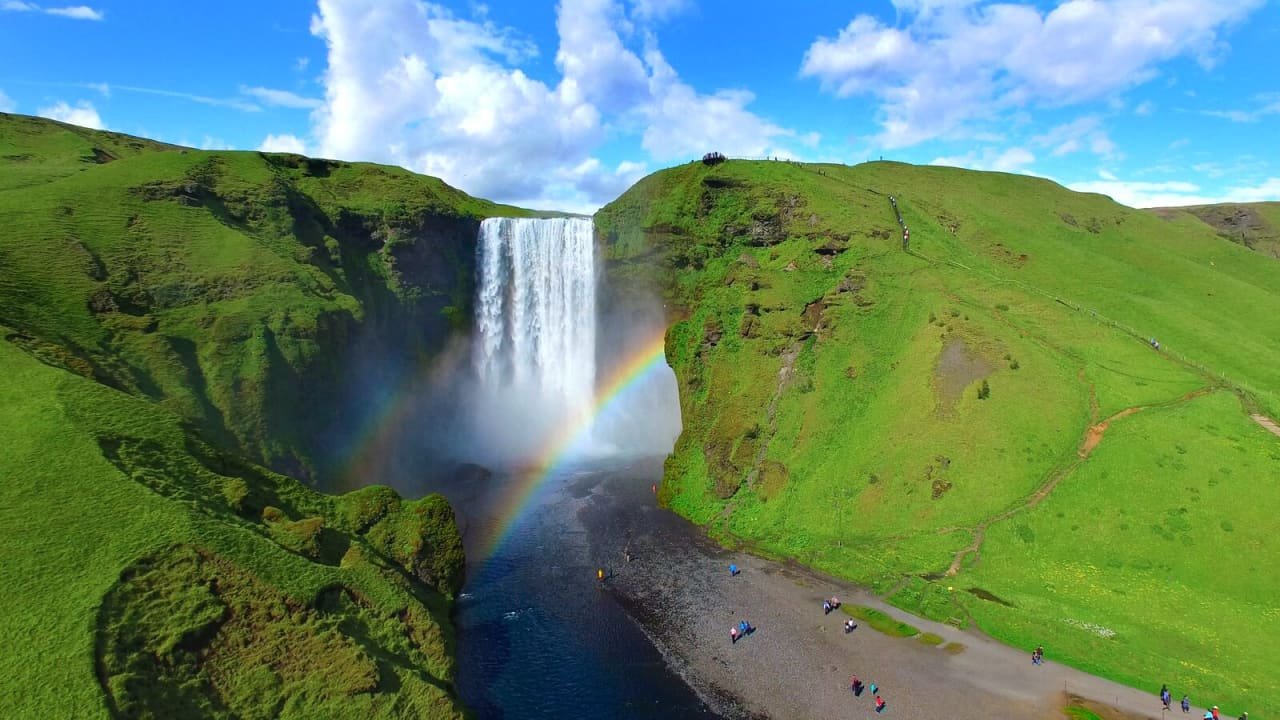
After rain, or during periods of higher water flow, it’s difficult to avoid getting your shoes wet. Waterproof hiking boots make a noticeable difference, especially if you’re visiting several South Coast attractions on the same day.
What Is the Best Time to Visit?
Gljúfrabúi is open throughout the year, although conditions vary with the seasons.
Summer
Summer offers the safest footing and the easiest access inside the canyon. Long daylight hours also make photography easier, particularly during the evening when crowds begin thinning out.
Autumn
Autumn is one of the most enjoyable times to visit. Cooler temperatures reduce visitor numbers, while the surrounding moss and grasses begin changing color.
Winter
Winter transforms the canyon into a landscape of snow and ice. The scenery is beautiful, but access may become difficult if ice forms around the entrance or inside the canyon.
Always respect any temporary closures.
Spring
Spring brings stronger water flow as snow melts in Iceland’s highlands. The waterfall becomes more powerful, though the stepping stones may be partially submerged after heavy rain.
Photography Tips
Photographing Gljúfrabúi is more challenging than photographing Seljalandsfoss.
The canyon is narrow, the lighting changes quickly, and water spray constantly lands on camera lenses. A wide-angle lens helps capture both the waterfall and the surrounding rock walls, while a microfiber cloth quickly becomes one of the most useful items in your camera bag.
The best photographs are often taken from just inside the canyon entrance, where the opening naturally frames the waterfall.
Trying to stay perfectly dry usually doesn’t last long.
Facilities and Visitor Information
Gljúfrabúi doesn’t have its own visitor facilities, but it benefits from those at neighboring Seljalandsfoss.
Visitors can access:
- Paid parking
- Restrooms
- Walking paths
- Information boards
- Café and seasonal food services nearby
Since the waterfall shares the same parking area, adding it to your visit usually extends the trip by only 20 to 30 minutes.
Gljúfrabúi vs. Seljalandsfoss
Because the two waterfalls sit side by side, visitors often wonder whether Gljúfrabúi is worth the extra walk.
The answer depends on what you’re looking for.
Seljalandsfoss is larger, more iconic, and offers the famous path behind the waterfall. It’s the landmark almost everyone comes to see.
Gljúfrabúi feels different. The canyon creates a quieter, more enclosed experience that feels surprisingly removed from the crowds only a few hundred meters away.
On one visit, I counted well over a hundred people around Seljalandsfoss while fewer than twenty had wandered over to Gljúfrabúi. That gap probably won’t stay that wide forever, but it says something about how easily hidden places can escape attention, even when they’re practically next door.
Safety Tips
Although reaching Gljúfrabúi isn’t difficult, conditions can become slippery.
Keep these tips in mind:
- Wear waterproof footwear with good grip.
- Expect wet rocks throughout the canyon.
- Cross the stepping stones carefully.
- Avoid climbing the canyon walls.
- Respect trail closures during winter.
- Keep electronics protected from water spray.
Most visitors leave wetter than they expected, but that’s part of the experience.
Is Gljúfrabúi Worth Visiting?
Absolutely.
If you’re already visiting Seljalandsfoss, skipping Gljúfrabúi means missing one of Iceland’s most distinctive waterfalls for the sake of a five-minute walk.
It offers a completely different experience despite sharing the same location. One waterfall is open, dramatic, and instantly recognizable. The other stays hidden until the last moment, rewarding anyone willing to step into the canyon.
That contrast is what makes visiting both worthwhile.
Frequently Asked Questions
How tall is Gljúfrabúi?
Gljúfrabúi is approximately 40 meters (131 feet) tall.
How far is Gljúfrabúi from Seljalandsfoss?
The waterfall is about a five-minute walk from Seljalandsfoss along a marked footpath.
Can you walk inside the canyon?
Yes. Visitors can enter the canyon by crossing stepping stones, although waterproof shoes are strongly recommended.
Is there an entrance fee?
No. There is no admission fee, but parking at the Seljalandsfoss lot is paid.
How long should you spend at Gljúfrabúi?
Most visitors spend 20 to 30 minutes, though photographers often stay longer.
Is Gljúfrabúi suitable for children?
Yes, although parents should supervise children closely because the rocks inside the canyon are often wet and slippery.