
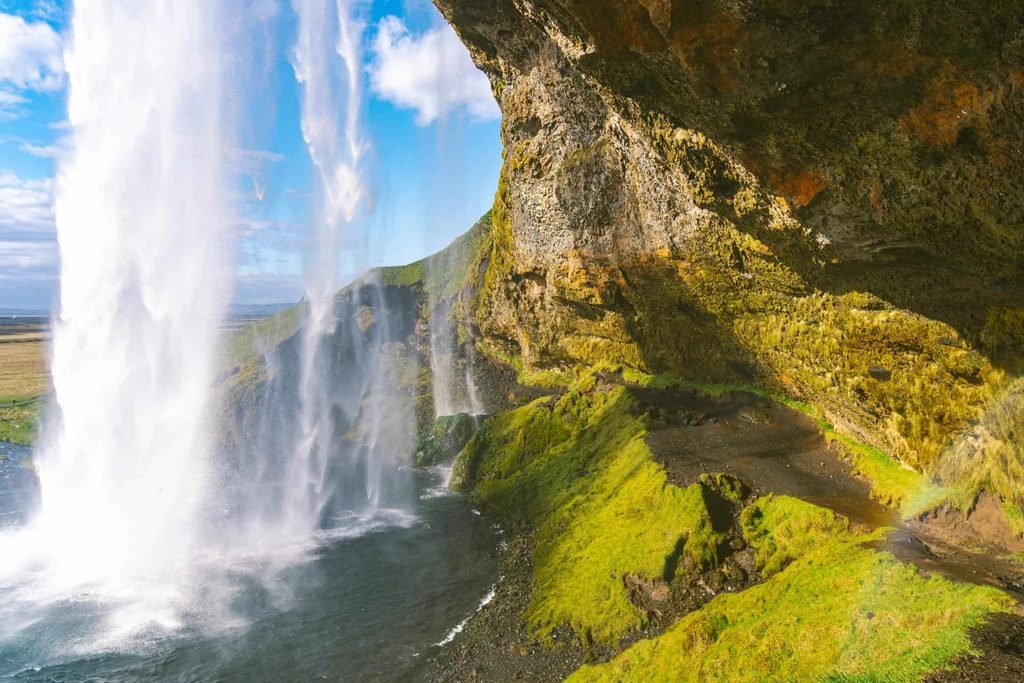
Seljalandsfoss isn’t Iceland’s biggest waterfall or its most powerful. What makes it unforgettable is something very few waterfalls in the world offer: you can walk behind the curtain of water and look out across the South Coast from inside the cascade itself.
That single feature has made Seljalandsfoss one of Iceland’s most photographed landmarks, but it also means many visitors underestimate what the experience is actually like. The path is slippery, the mist is heavier than most people expect, and weather can completely change the visit within minutes. Knowing when to arrive and what to bring makes a noticeable difference.
Whether you’re driving the Ring Road or exploring Iceland’s South Coast, Seljalandsfoss is one of those stops that consistently earns its place on the itinerary.
What Is Seljalandsfoss?
Seljalandsfoss is a 60-meter (197-foot) waterfall on Iceland’s South Coast, fed by the Seljalands River, which originates beneath the Eyjafjallajökull glacier. Its defining feature is the walking path that circles behind the falling water, allowing visitors to experience the waterfall from every angle.
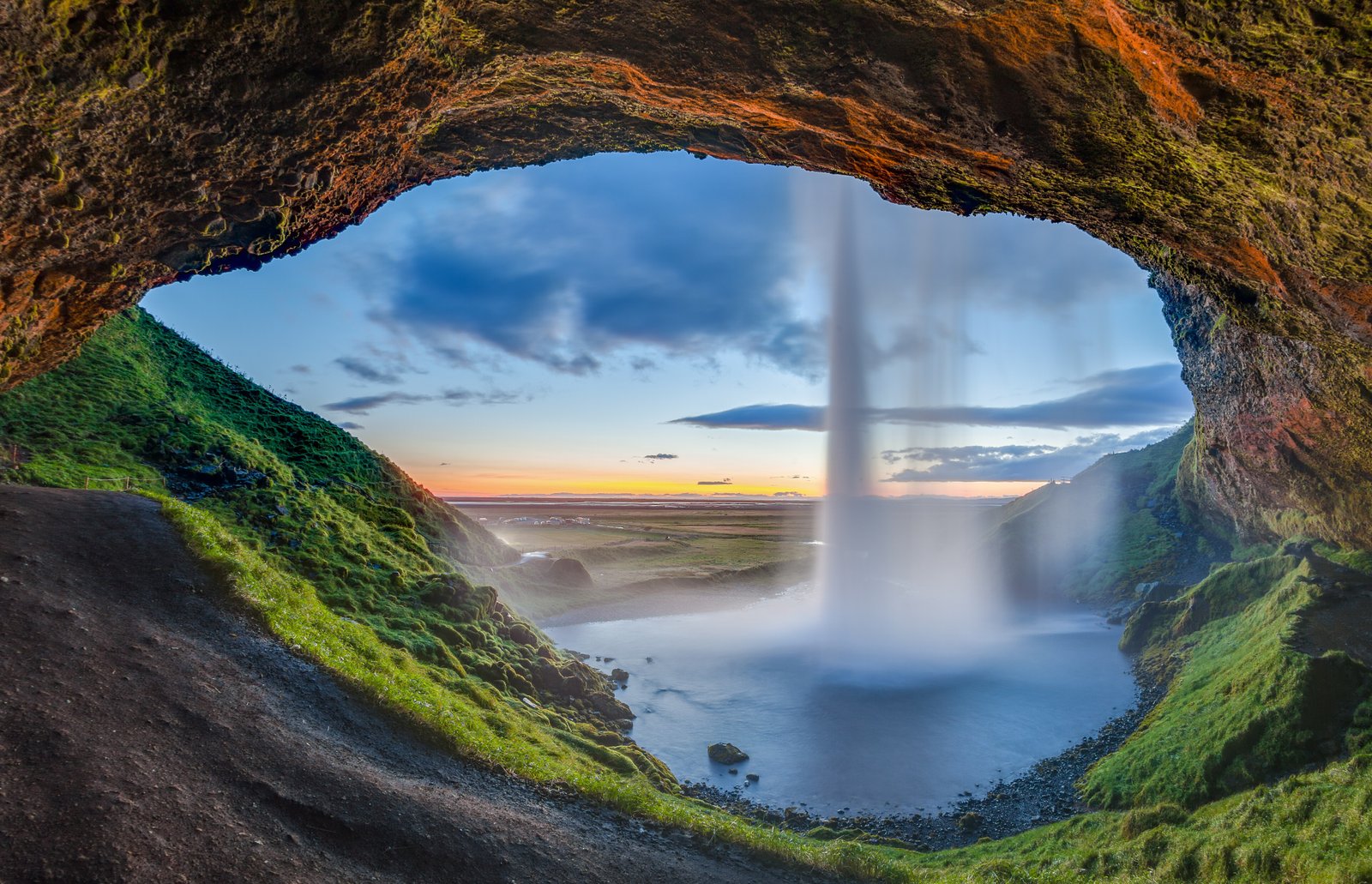
Unlike many waterfalls that are viewed from a single platform, Seljalandsfoss is interactive. The cliff behind the waterfall has gradually eroded over thousands of years, creating enough space for a footpath between the rock wall and the water itself.
That combination of geology and accessibility has made it one of the country’s most recognizable natural attractions.
Where Is Seljalandsfoss?
Seljalandsfoss sits along Iceland’s famous South Coast, roughly 128 kilometers (80 miles) southeast of Reykjavík. The drive takes around 1 hour and 45 minutes via Route 1, better known as the Ring Road.
Its location makes it one of the first major attractions many travelers encounter after leaving the capital. Because of that, it’s often combined with other South Coast highlights on the same day.
Nearby attractions include:
- Gljúfrabúi Waterfall
- Skógafoss
- Sólheimajökull Glacier
- Reynisfjara Black Sand Beach
- Dyrhólaey
- Vík í Mýrdal
Rather than treating Seljalandsfoss as a quick roadside stop, many travelers spend an hour or more exploring both waterfalls in the area.
Why Is Seljalandsfoss Famous?
The waterfall’s unique claim to fame is the complete walking loop behind the water.
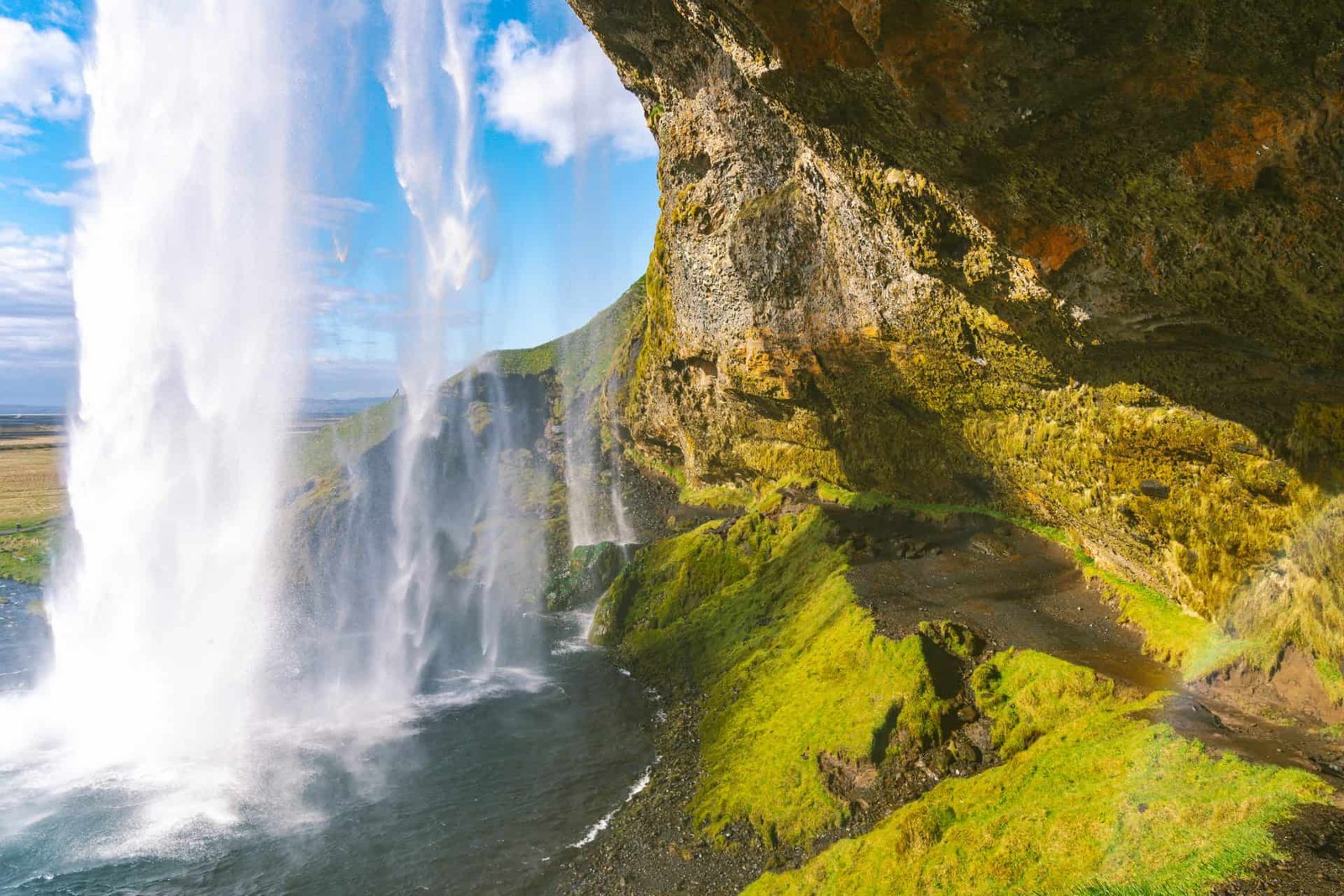
Standing behind the cascade changes your perspective entirely. Instead of looking at the waterfall, you’re looking through it. On sunny days, the constant mist often creates rainbows that appear almost suspended inside the falling water.
It’s a surprisingly immersive experience. The roar of the water becomes louder, the temperature drops slightly, and everything nearby is coated in a fine layer of spray.
Photos rarely capture that feeling.
Can You Walk Behind Seljalandsfoss?
Yes. Walking behind Seljalandsfoss is the main reason most people visit.
A maintained trail circles around the waterfall, allowing visitors to pass behind the cascade before returning to the viewing area on the opposite side.
The walk is relatively short and suitable for most visitors, but there are a few things worth knowing beforehand.
The rocks become extremely slippery after rain, and you’ll almost certainly get wet from the mist, even on calm days. Waterproof shoes make the experience much more comfortable than regular sneakers.
During winter, sections of the trail may close because of ice accumulation. If barriers are in place, they’re there for safety rather than convenience.
What Is the Best Time to Visit Seljalandsfoss?
Seljalandsfoss is open year-round, but each season offers a different experience.
Summer
Summer provides long daylight hours and the easiest walking conditions. Between June and August, the trail behind the waterfall is usually fully accessible, while the midnight sun allows photographers to shoot during soft evening light long after most visitors have left.
The downside is crowds. Midday parking areas often fill with tour buses.
Autumn
September and October are often overlooked. Visitor numbers begin to drop, the surrounding fields turn golden, and there’s still enough daylight to explore comfortably.
Winter
Winter transforms the waterfall completely. Ice formations develop around the cliffs, creating dramatic scenery that looks very different from summer photographs.
The trade-off is that the path behind the waterfall may be closed if ice creates unsafe conditions.
Spring
Spring brings stronger water flow as snow begins melting in Iceland’s highlands. Weather can still change quickly, so waterproof clothing remains essential.
Photography Tips
Seljalandsfoss is one of Iceland’s most photographed waterfalls, but timing matters more than camera equipment.
Early morning usually provides the quietest conditions and softer light. Late evening during summer offers similarly good lighting with fewer people in frame.

If you’re photographing from behind the waterfall, expect water droplets on your lens. Carrying a microfiber cloth sounds like a small detail until you’re wiping spray off every few minutes.
A wide-angle lens works particularly well because it captures both the waterfall and the surrounding South Coast landscape beyond the opening.
Sometimes the strongest photo isn’t the classic front view at all. Walking halfway behind the waterfall and turning toward the valley often produces a more distinctive composition.
Facilities and Visitor Information
Seljalandsfoss is one of the better-equipped natural attractions along the South Coast.
Visitors will find:
- Paid parking
- Restrooms
- Walking paths
- Information boards
- Small café and seasonal food services nearby
The walk from the parking area to the waterfall only takes a few minutes, making it accessible even for travelers with limited time.
Most visitors spend between 45 minutes and 90 minutes here, especially if they also visit nearby Gljúfrabúi.
Don’t Miss Gljúfrabúi
About five minutes from Seljalandsfoss sits one of Iceland’s best hidden waterfalls.
Gljúfrabúi is partially concealed behind a narrow canyon, and many visitors drive away without realizing it’s there.
Reaching it involves stepping across shallow water and squeezing through a gap in the rock before the waterfall suddenly appears inside the cave-like opening.
It’s a completely different experience from Seljalandsfoss.
During one visit, I noticed dozens of people leaving the main waterfall while only a handful continued toward Gljúfrabúi. The contrast was surprising because the second waterfall ended up being the one people talked about afterward.
That probably won’t always be true as Iceland grows more popular, but for now it still feels like a discovery.
Safety Tips
Seljalandsfoss is easy to visit, but Iceland’s natural attractions deserve respect.
Keep these tips in mind:
- Wear waterproof footwear with good grip.
- Expect to get wet behind the waterfall.
- Stay on marked paths to protect fragile vegetation.
- Avoid climbing rocks for photographs.
- Respect trail closures during icy conditions.
- Check Iceland’s weather forecast before driving.
The waterfall itself isn’t technically difficult to visit. Most accidents happen because people underestimate how slippery wet volcanic rock becomes.
Is Seljalandsfoss Worth Visiting?
For most travelers, absolutely.
Iceland has hundreds of waterfalls, many of them taller or more powerful than Seljalandsfoss. Yet very few offer an experience that’s this interactive. Walking behind the water transforms what could have been another scenic viewpoint into something memorable.
If you’re already exploring Iceland’s South Coast, skipping Seljalandsfoss would mean missing one of the country’s defining natural landmarks.
Just don’t rush through it.
Spend a little longer than you planned. Walk behind the waterfall even if you end up damp. Wander over to Gljúfrabúi before getting back in the car.
The extra half hour is usually what people remember most.
Frequently Asked Questions
How tall is Seljalandsfoss?
Seljalandsfoss is approximately 60 meters (197 feet) tall.
Can you walk behind Seljalandsfoss?
Yes. A trail circles behind the waterfall, although it may close during winter because of ice.
Is there an entrance fee?
There is no admission fee to see the waterfall itself, although visitors pay for parking.
How long should you spend at Seljalandsfoss?
Most visitors spend 45 to 90 minutes, especially if they also explore Gljúfrabúi.
Is Seljalandsfoss suitable for families?
Yes. The main viewing area is easy to reach, although the path behind the waterfall can be slippery and requires extra care with children.
What should you wear?
A waterproof jacket, waterproof hiking shoes, and layered clothing are recommended throughout the year.